


In my first year in ministry I heard someone say,
“Grace preachers never talk about hell, sin, and judgment.”
I didn’t want to be a pastor who avoided hard truths. I believe in grace—but also in the reality of hell. So I made a decision early on: I was going to study hell seriously. Not just so I could preach on it, but so I could truly understand what God’s Word says.
Back in 2018, I committed a full year to this. I read everything I could, wrestled with Scripture, and came to a humbling realization: I didn’t know nearly as much as I thought I did.
That’s when two resources shaped my journey:
- Edward Fudge’s book The Fire That Consumes
- The Rethinking Hell YouTube channel
They didn’t give me easy answers—but they gave me better questions. I realized there are faithful, Bible-loving Christians who believe hell is real, but that the nature of it deserves a closer look.
Even with all the study, I didn’t preach on hell until our seventh year as a church. Because some topics aren’t fast-food sermons—they’re slow-cooked truths. Deep Bible study makes you sit still and listen longer.
It’s Not Just a Sermon—It’s a Life of Preparation
In 2022, someone close to me made a joke:
“Pastors have it easy. They only work one hour a week.”
That can be humorous in the right setting—but it’s far from true. Overnight success is not seen in the immediate moment. A sermon might be an hour, but the study behind it takes weeks, even years.
It’s like washing the dishes. Before you ever scrub a plate, you need water in the house. You need electricity, soap, a sponge. Like mowing the yard—you don’t just pull the cord. You have to buy the mower, fuel it, and maintain it.
Preaching on hell requires deep preparation. And that’s why I’m thankful for books like Hell Is Made Holy by David Aaron Beaty. It helped me say what I had long felt but didn’t yet know how to express: Hell is real—but not what many think.
Beaty’s View: Judgment That Ends in Finality, Not Forever
David Aaron Beaty presents a bold but biblical argument: the wicked will face judgment—not ongoing torment—but destruction and final death. His book dives deep into Revelation, the Dead Sea Scrolls, and Old Testament sacrifice language to show that “eternal fire” refers to a judgment that is decisive, not endless suffering. The soul doesn’t automatically live forever—only in Christ do we receive eternal life.
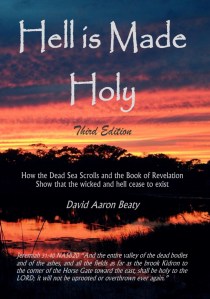
He builds a case from Revelation, Isaiah, and the Old Testament sacrificial system to show that “forever rising smoke” is symbolic. It’s not about endless pain—it’s about completed judgment.
The wicked don’t just suffer—they are consumed. Hell isn’t a furnace where God keeps souls alive forever. It’s where sin and death go to end.
If you’re a pastor, Bible teacher, or just someone who’s wrestling with how hell fits with God’s love, I highly recommend Hell Is Made Holy. It won’t answer everything—but it will help you ask better questions. And that’s what good theology should do.
This book reminded me:
God is just—but He’s not cruel.
Hell is real—but it’s not sadistic.
And grace doesn’t ignore judgment—it just tells the full story.
To buy this book
 Courage With Grace Ministries